FAQs
Got Questions?
Jump to FAQs regarding
Fence Options & Materials
Choosing the right fence starts with the right material. Learn more about vinyl, aluminum, and wood fencing options, including privacy styles, HOA-friendly colors, gates, Florida weather considerations, and which fence type may be the best fit for your home, business, or DIY project.
Save On Fences offers vinyl, aluminum, and wood fencing options for residential, commercial, and DIY projects. Whether you need privacy fencing for your backyard, aluminum fencing for an open-view area, or materials delivered for your own installation, we can help you compare options and choose the right fit for your property.
Vinyl privacy fencing is one of the most popular choices for homeowners who want a clean, low-maintenance privacy fence. Wood fencing can also provide strong privacy and a more traditional look. If privacy is your main goal, we’ll help you compare the layout, height, color, and material options that make the most sense for your yard.
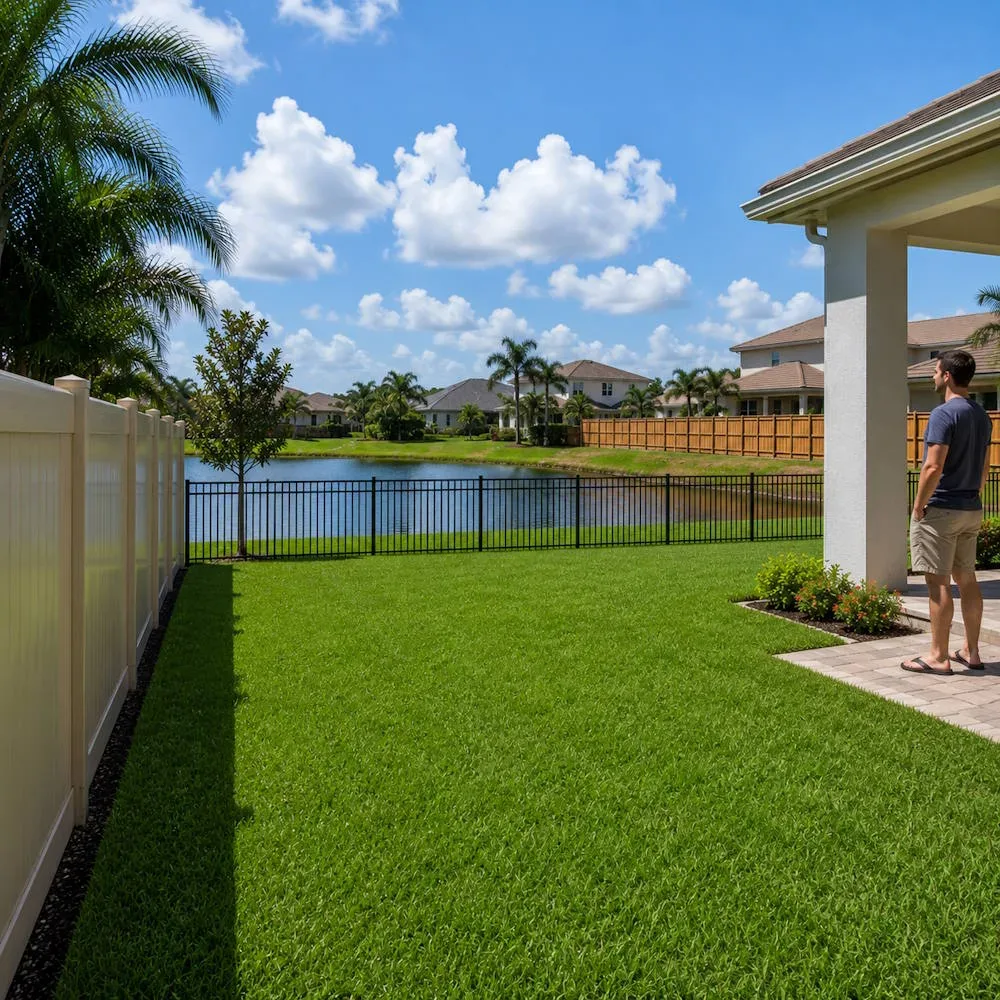
Vinyl fencing is a low-maintenance option that works well for privacy and everyday residential use. Aluminum fencing is a great choice when you want an open view, such as around pools, ponds, easements, or front yard areas where full privacy may not be allowed. Wood fencing offers a classic look and strong privacy, but it usually requires more upkeep over time.
Yes, vinyl fencing is a popular choice in Florida because it does not rot, peel, or need painting like wood. It holds up well to sun, rain, and humidity when properly installed and cared for. For many homeowners, vinyl is a good balance of privacy, appearance, and low maintenance.
Yes, we offer vinyl fencing in several color options, but white and tan are the most common choices. White vinyl is a popular option for privacy fencing, while tan vinyl is often preferred or required in certain HOA communities. If your neighborhood has specific fence color or style rules, we can help you match the material details needed for approval.
Yes, Save On Fences can help with materials-only orders for DIY customers, contractors, and property owners who already have an installer. We can provide vinyl fence panels, posts, gates, hardware, and other needed materials based on your project layout. Delivery options may also be available depending on your location and order size.
Quotes, Pricing & Project Planning
A fence quote is about more than just linear footage. This section covers the details that can affect your project plan and final price, including gate placement, access to the yard, existing fence removal, slopes, landscaping, irrigation, layout decisions, and material planning for installed or build-your-own fence projects.
The best way to get an accurate fence quote is to share your project address, approximate fence layout, total footage (if known), fence height, material preference, and the number and size of gates you want. A survey, site plan, or simple drawing can also help us understand where the fence will go. Photos of the yard are helpful too, especially if there is an existing fence, slope, trees, landscaping, concrete, or anything else near the planned fence line.
Fence pricing can change based on more than just the number of feet. Gates, corners, slopes, tear-out, delivery distance, access to the yard, permit needs, HOA requirements, and site conditions can all affect the final quote. A straight fence line with easy access is usually simpler than a yard with multiple turns, tight side yards, old posts, tree roots, sprinkler lines, or heavy landscaping in the way.
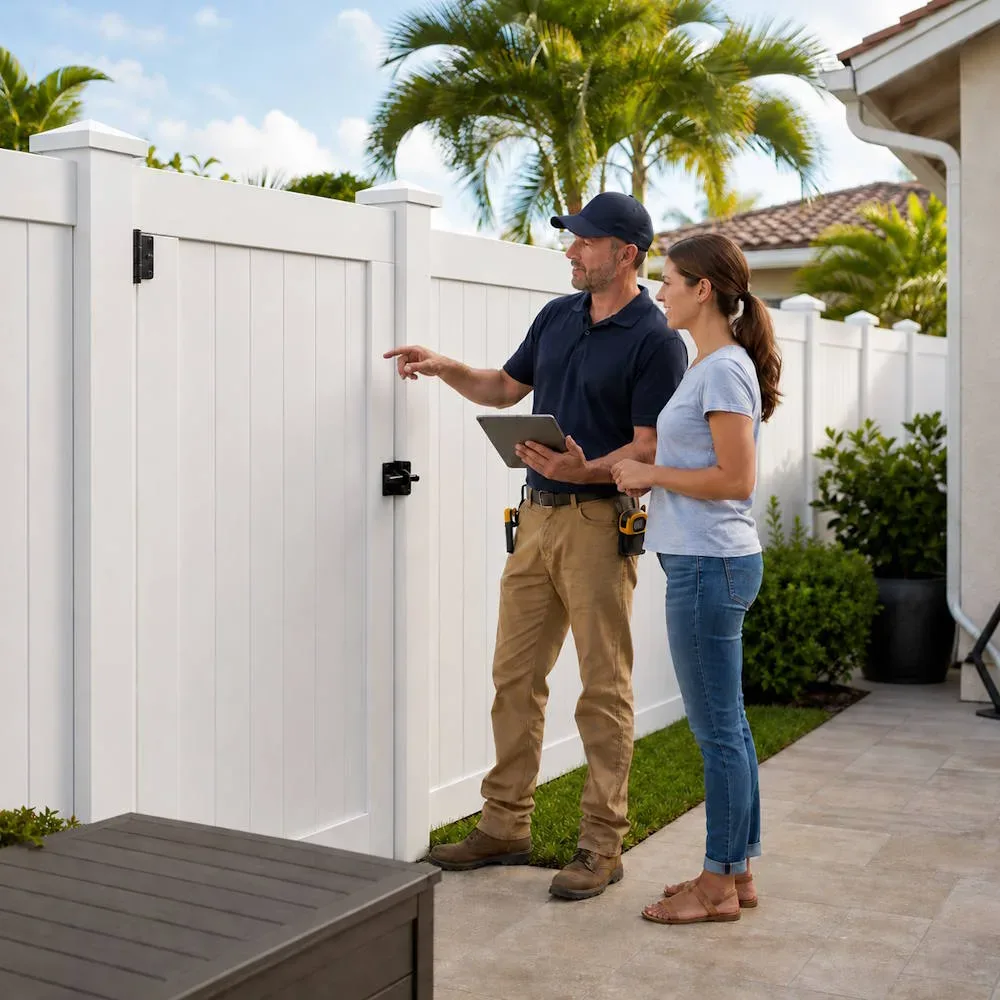
Gate placement should be based on how you actually use your yard. Many homeowners want a gate where it looks best, but it also needs to make sense for daily use. Think about where you park, where trash cans go, how lawn equipment gets into the backyard, whether one side of the home has more space than the other, and whether a mower or wheelbarrow needs a wider opening. Planning the gate location before ordering materials can help avoid frustration later.
Most backyard gates swing inward toward the yard, but the best direction depends on your layout. You may want the gate to swing toward the backyard if you are entering from the front or side of the home, but a different swing may make sense if landscaping, AC equipment, steps, pavers, drainage, or a slope would block the gate. Gate swing is also important for pets, lawn equipment, and everyday convenience, so it should be discussed before the project is finalized.
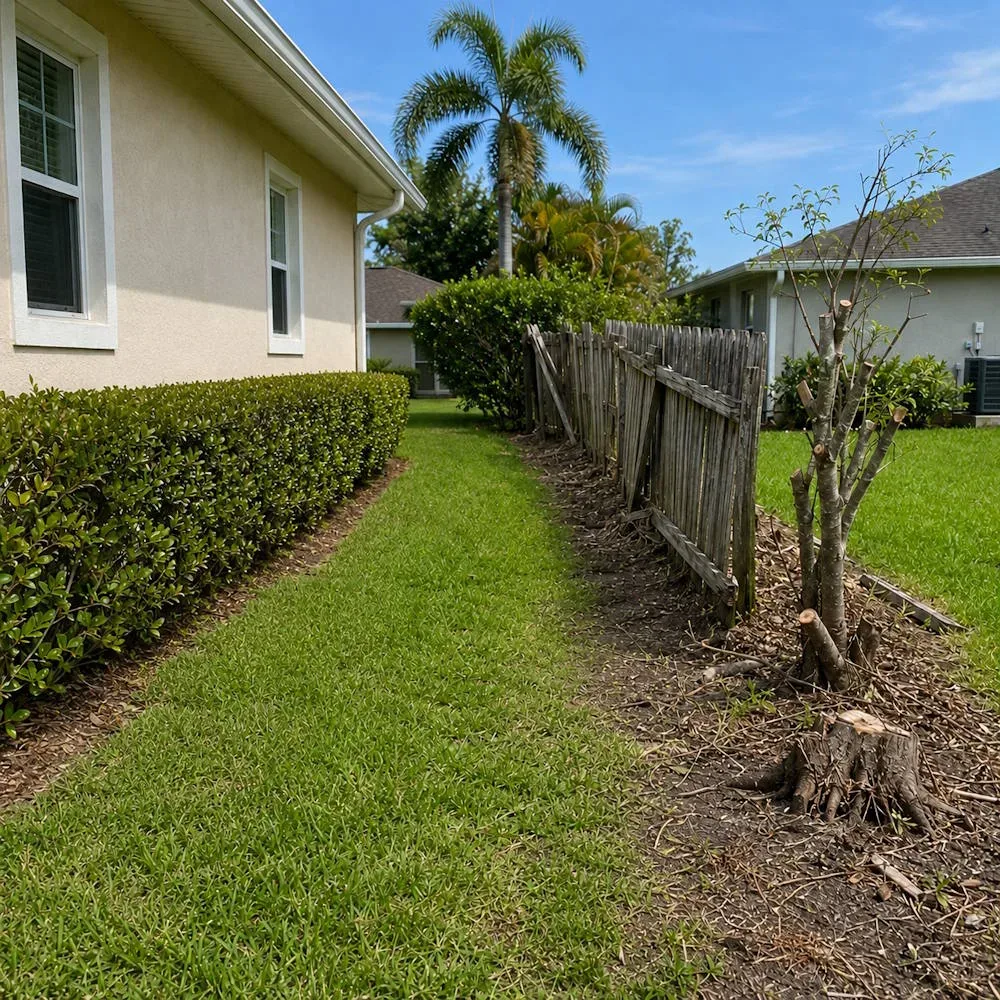
Before approving your layout, look for anything that may interfere with the fence line or post locations. This can include stumps, tree roots, irrigation heads, buried drain lines, landscape borders, low-voltage lighting, AC units, pool equipment, sheds, concrete pads, and existing fence posts. These details may not seem like a big deal at first, but they can affect where posts go, how the fence lines up, and whether extra work is needed.
Yes, we can help plan a materials list for homeowners or contractors who want to build their own fence. Once we know the layout, footage, fence style, height, number of gates, and post needs, we can help estimate the panels, posts, caps, gate hardware, concrete, and other materials needed. For DIY fencing projects, it is especially important to confirm measurements, gate locations, property lines, and site conditions before ordering so you do not end up short on materials or with the wrong post types.
Installation, DIY & Delivery Options
A new fence project can be handled in more than one way. Save On Fences can help with material orders, delivery, build-your-own fence projects, and installation coordination through trusted installers. This section explains how delivery works, what to expect before materials arrive, how installation is coordinated, and what to know if you already have your own fence materials.
Save On Fences provides fence materials and can coordinate installation through trusted installers. Some customers want a full project with materials and installation, while others only need materials for a DIY project. We’ll help you understand your options based on your layout, location, material choice, and project timeline.
Yes, you can purchase fence materials for a build-your-own fence project. We provide the materials based on the layout and measurements you give us, and we can help answer questions or assist with planning along the way. It’s important to confirm your fence layout, gate locations, post needs, and measurements before ordering so the material list is as accurate as possible.
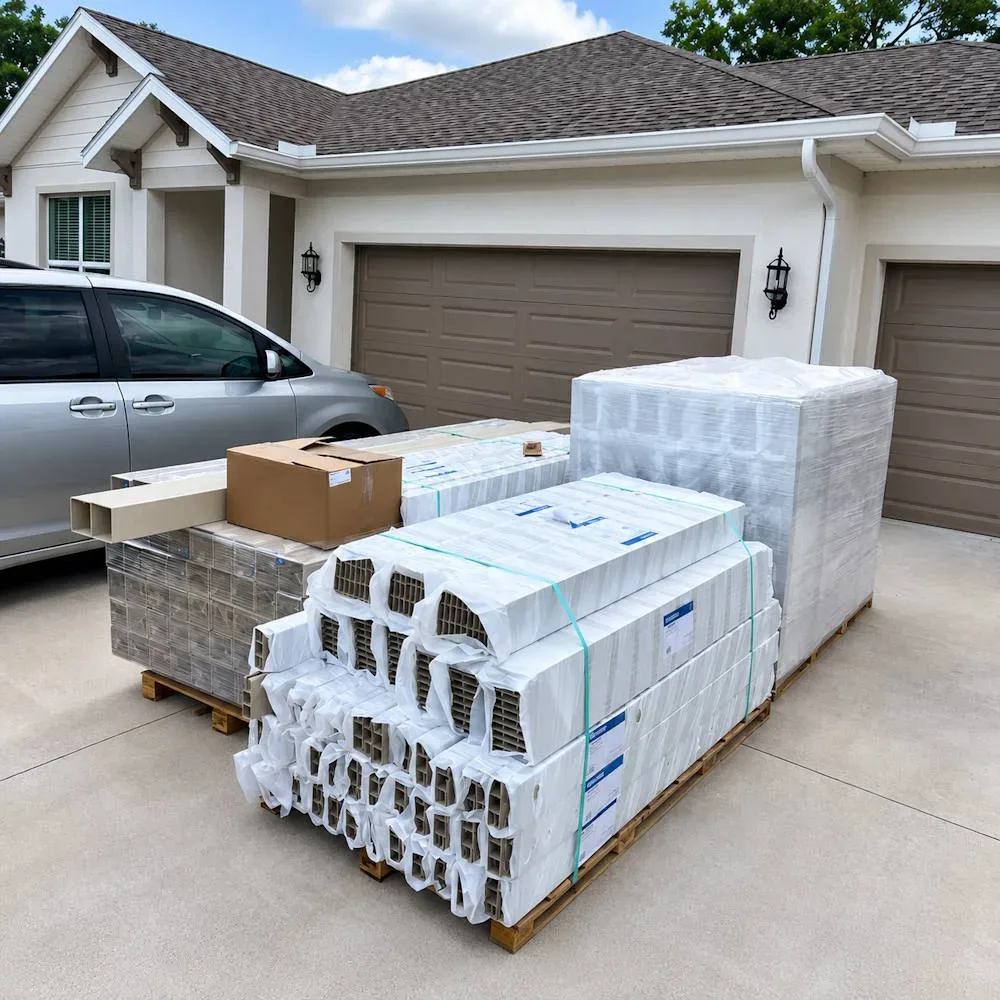
Fence materials are usually delivered on pallets to the driveway or another accessible drop-off area. We want someone to be there at the time of delivery to review the order and check for any visible damage or issues before the driver leaves. Once the driver leaves, responsibility for damaged or missing materials may shift to the homeowner, so it’s important to inspect the delivery when it arrives.
Materials are typically dropped off in the driveway or another clear, accessible area approved before delivery. Delivery drivers will not drive across lawns, neighbor’s property, soft ground, or areas that could cause damage or create access problems. If your project has limited access, a tight driveway, a gated property, or a commercial site with specific delivery rules, we’ll discuss that during the planning process.
Timeline depends on the material, permits, HOA approval, special orders, delivery schedule, and installer availability. Typical vinyl, black aluminum, and standard wood panel orders are often ready within about one week after the deposit is paid. Special material orders, HOA approvals, and permits can take longer. Save On Fences focuses on regular communication with customers and suppliers so you know where your project stands and are not left waiting for answers.
For fence projects we install, there usually is not a separate delivery fee because the materials are either picked up by the installers or delivered by the supplier ahead of the installation. For materials-only orders, local delivery is often available within about two hours of Tampa, with typical delivery costs ranging from $75 to $250 depending on distance, order size, and delivery details. Anything more than two hours from Tampa would need to be quoted separately. We have also helped customers with deliveries to other states because the material savings can still make sense even with freight shipping, but long-distance delivery is priced case by case.
Measurements, Property Lines & Site Prep
Getting the layout right is one of the most important parts of a fence project. This section covers surveys, property lines, measurements, utility marking, old fence removal, landscaping, irrigation, shared fence lines, and other site details that should be reviewed before materials are ordered or installation is scheduled.
A survey is strongly recommended before installing a fence, and the homeowner is responsible for confirming the property lines. You may already have a copy of your survey from when you purchased the home, your closing documents, mortgage paperwork, title company, builder, or county records. If no survey is available, a new survey should be completed by a certified surveyor before moving forward.
Online maps can be helpful for estimating a general layout, but they should not be used as legally binding property lines. County property appraiser maps, Google Maps, and similar tools are not exact surveys. Save On Fences can help review a layout for planning purposes, but the homeowner is responsible for confirming the actual property boundaries before materials are ordered or installation begins.
Yes, Save On Fences can help provide measurements during the planning process based on the layout, survey, photos, or information provided by the customer. Fence layouts are usually planned by straight runs, corners, gates, and returns to the house. Final accuracy still depends on the information provided, so it is important to confirm the layout before approving the estimate or ordering materials.
Installers may be able to help look for visible property pins, but locating pins is not guaranteed and should not replace a survey. Property pins can be buried, missing, moved, or difficult to identify. If the fence location depends on exact boundary placement, the property lines should be confirmed before installers arrive so the material count, layout, and install pricing are accurate.
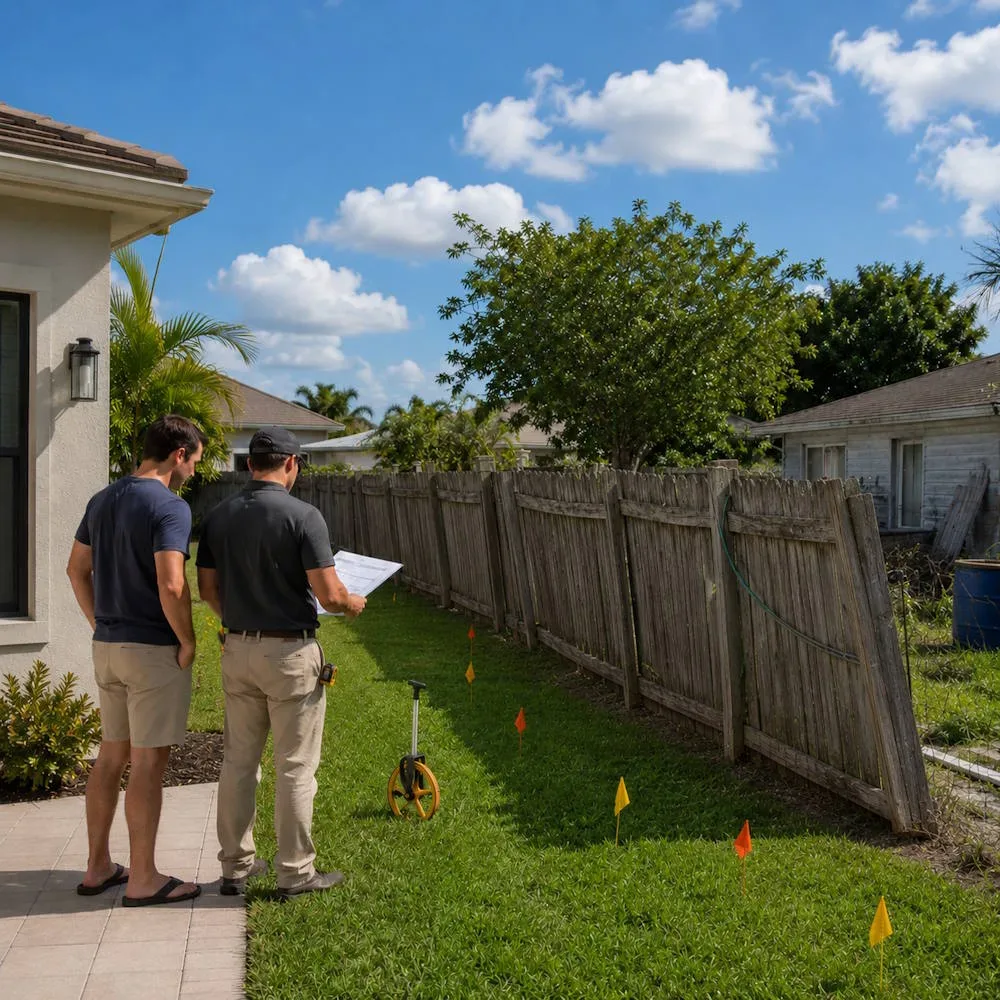
The fence line should be clear before installation is scheduled. This includes old materials, furniture, toys, trailers, trash cans, vines, shrubs, stumps, tree limbs, landscape borders, and anything else that may block the work area. If old fence tear-out is included with an installed project, it can usually be completed the same day for an additional cost. Other items such as landscaping, trees, stumps, or debris should be handled before the installers arrive to help avoid delays or added charges.
Homeowners should mark or identify any private underground items they know about, including sprinkler heads, irrigation lines, landscape lighting, low-voltage wiring, invisible dog fences, drain lines, pool lines, or other buried items. For installed projects, Save On Fences will handle the Sunshine 811 utility marking request when required. For DIY fence projects, homeowners should visit the link above or call 811 or (800) 432-4770 before digging. 811 helps mark public utilities, but it does not usually mark private irrigation, lighting, or other homeowner-installed lines.
Obstacles can affect where the fence can be placed and how the materials are planned. Stumps, large roots, concrete, pavers, retaining borders, sheds, AC units, pool equipment, and existing posts may change the location of posts, the size of panels that can be used, or the exact path of the fence. A full site review should be completed before installation is scheduled so these issues can be discussed ahead of time.
If a fence will be installed on or near a shared property line, it is a good idea to talk with your neighbor before the project begins. This can help avoid confusion about property lines, access, pets, cost sharing, and what the finished fence will look like. Save On Fences can help facilitate that conversation by providing cost-sharing details, material examples, and project information that can be shared with the neighbor.
For materials-only orders, the customer is fully responsible for confirming the layout, measurements, material count, and post types before ordering. Save On Fences can help answer questions and assist with planning, but any overages or shortages are the customer’s responsibility. Once materials are delivered, returns or full refunds are not available. Orders that have already been pulled or are in motion but have not yet been delivered may be subject to a 20% restocking fee.
Commercial projects should review access, staging areas, business-hour scheduling, customer traffic, dumpsters, equipment, and who will be the main point of contact. Leaving materials overnight can increase the risk of theft or damage, so delivery and installation should be planned carefully. Dumpster enclosures, gates, and other custom commercial layouts are priced based on the site, material needs, and project details.
Permits, HOA & Local Rules
Fence rules can vary depending on your city, county, HOA, subdivision, lot location, and property type. This section explains permits, HOA approvals, Plant City requirements, historic district review, corner lots, easements, waterways, and how Save On Fences helps provide the details needed before your project moves forward.
Permit requirements depend on where the property is located. For example, just because Hillsborough County may not require a permit for certain fence projects does not mean the City of Plant City follows the same rule. Plant City municipality does require fence permits in many cases, so it is important to check before moving forward. You can learn more in our guide to fence permits in Plant City.
Yes, for installed fence projects, the installers arranged by Save On Fences will pull the permit when one is required. For DIY or materials-only projects, the homeowner is responsible for confirming and handling any required permits. If the total job is over $5,000, a Notice of Commencement may also be required. If the property is located in Plant City’s Historic District, a Certificate of Appropriateness may be required before the fence can be installed.
Yes, if your community has an HOA or architectural review process, the homeowner is responsible for getting written approval before the project moves forward. HOA approval should be confirmed before materials are ordered or installation is scheduled. Fines, code violations, rework, or HOA issues can become a major setback, so it is important to make sure the fence is approved before work begins.
Yes. Save On Fences can create the site plan that you submit with your HOA application. We overlay the fence measurements onto your survey and provide requested details such as fence height, material type, color, style, product photos, and insurance or COI documents when needed. The homeowner remains the HOA’s point of contact, but Save On Fences can communicate with the HOA as needed to help answer questions and keep the process moving.
Fence rules can vary between newer communities like Farm at Varrea and Fox Branch Ranch and more established neighborhoods like Walden Lake. Even within a large community, requirements may change by subdivision. For example, one section of Walden Lake may have masonry corner requirements while another may not have the same restrictions. This is why it is important to review your specific HOA guidelines and community standards instead of assuming your fence will be approved because another nearby home has something similar.
Before applying, check the rules for fence height, color, material, style, gate placement, setbacks, corner lots, sidewalks, ponds, conservation areas, drainage easements, and common areas. Some communities may require tan vinyl instead of white vinyl, black aluminum along ponds or open-view areas, or certain placement rules near the front of the home. Save On Fences asks for your HOA guidelines and community standards so we can help provide the correct details with your application.
Corner lots, sidewalks, waterways, drainage easements, and common areas often come with extra rules. Your HOA may have one set of standards, while the city or county may have additional requirements related to right-of-way, visibility, drainage, or access. These rules can affect where the fence can be placed, how far it must be set back, what material can be used, and whether full privacy fencing is allowed in certain areas.
Historic and commercial projects may require extra review. In Plant City’s Historic District, a Certificate of Appropriateness may be required in addition to the normal permit process. Commercial projects may also involve property manager approval, landlord approval, insurance requirements, site access rules, dumpster enclosure details, and business-hour scheduling. Save On Fences can help provide the project details needed, but the property owner or business representative is ultimately responsible for approvals.
Warranty & After-Project Support
This section explains what to expect after your fence project is complete, including vinyl and aluminum warranty coverage, manufacturer claims, replacement parts, post-install walkthroughs, gate adjustments, storm damage, and support for materials-only or DIY fence orders.
Vinyl and aluminum fencing include a limited lifetime residential warranty for single-family residential properties. Commercial and non-residential properties include a 30-year limited warranty. Warranty coverage is provided by the manufacturer or supplier, and Save On Fences can help manage the process if a warranty concern comes up.
Warranty coverage generally applies to manufacturer defects under normal use and normal weather conditions. This may include issues such as peeling, flaking, rotting, chipping, cracking, blistering, or abnormal fading or discoloration. Gradual fading or normal weathering over time is expected with outdoor products and is not usually considered a warranty defect.
Save On Fences should be your first point of contact if you believe there may be a warranty issue. We can review the concern, help gather the needed information, and work with the supplier through the warranty process. Warranty approval is ultimately determined by the manufacturer or supplier, but we will help guide the process and provide available order details when needed.
A product warranty covers qualifying material defects from the manufacturer or supplier. Installation support relates to the workmanship of the installed fence. After installation, we complete a walkthrough so you can review the finished project and bring up any questions or concerns. Any visible issues should be discussed during that walkthrough or reported immediately after installation. If a return visit is requested later, a service charge may apply, and free return visits are not guaranteed after the project is complete.
Gates can sometimes need minor adjustment over time due to normal use, ground movement, settling, weather, or everyday wear. Save On Fences focuses on full fence projects rather than small repair or maintenance calls, and our installer's minimum trip charge for a return visit is typically $450. For minor gate adjustments, it may be more cost-effective to contact a local handyman or fence repair company.
Storm damage, fallen trees, vehicle impact, mower damage, pets, misuse, or other accidental damage are not considered manufacturer defects. Replacement parts may be available for damaged panels, posts, caps, gates, or hardware. If replacement installation is needed, a minimum trip charge may apply, and depending on the size of the repair, a local handyman or fence repair company may be a more economical option.
Materials-only and DIY fence orders may still include the applicable manufacturer product warranty, but improper installation, incorrect measurements, missing parts due to order planning, or damage caused during self-installation are not covered as installation issues by Save On Fences. We can help identify replacement parts and provide order details when available, but the customer is responsible for the layout, installation, and final material use on DIY projects.
Keep your invoice, material details, warranty information, photos, and any HOA or permit documents related to your project. These records can be helpful if you ever need replacement parts, warranty support, insurance documentation, or proof of the fence material and installation details.